Why precise positioning can be crucial to the success of treatment
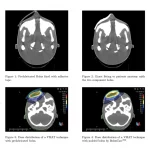
When treating tumours close to the skin’s surface, every millimetre counts. Even the tiniest air gaps between the skin and the bolus material can alter the actual radiation dose delivered – with a direct impact on the quality of treatment.
The challenge posed by conventional bolus materials
Conventional boluses are often placed on the skin and secured with adhesive tape. However, particularly in anatomically complex areas of the body – such as the chest wall, the head and neck region or the extremities – it is often impossible to achieve completely tight contact with the skin.
The result: air gaps between the bolus and the tissue can reduce the desired surface dose. As patient positioning can vary slightly with each radiotherapy fraction, the reproducibility of the treatment is also compromised. Scientific studies indicate that these effects can influence the planned dose distribution.
Patient-specific solutions are becoming increasingly important
One option is to produce customised 3D-printed boluses. These offer an excellent fit, but involve additional planning effort, longer preparation times and higher costs.
Solutions are needed that can be adapted quickly and easily to the individual’s anatomy and enable a high degree of precision.
BolusCare™: Customisable
The BolusCare™ two-component bolus now offers an alternative that can be moulded directly on the patient. After mixing both components, the material is adapted to the desired body contour within a few minutes and then cures to a dimensionally stable form.
The advantages:
- patient-specific adaptation to the anatomy
- significantly reduced air gaps between the bolus and the skin
- reproducible positioning throughout the entire treatment period
- more precise dose calculation through the inclusion of the bolus in the planning CT scan
- high patient comfort and ease of clinical use
In addition to traditional indications such as chest wall, skin or ENT tumours, the procedure opens up further applications, for example in electron beam radiotherapy or patient-specific moulds in brachytherapy.
White paper: Background, studies and practical application
Our white paper explains in detail the actual extent of the influence of air gaps, the clinical advantages offered by patient-specific boluses, and why the mouldable two-component bolus represents an interesting alternative to 3D-printed solutions.
In it, you will find, amongst other things:
- the physical principles of dose distribution,
- scientific findings on the significance of air gaps,
- a comparison between standard, 3D-printed and mouldable boluses,
- practical applications across various indications,
- clinical experience from radiotherapy.