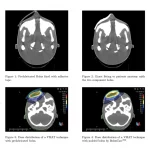
Traditional bolus materials, such as thermoplastic solutions, are often rigid and difficult to customise. According to standard reference works such as *The Physics of Radiation Therapy* (Khan), an inaccurate fit can lead to dose fluctuations. Whilst 3D-printed bolus solutions improve the fit, they are costly and time-consuming.
BolusCare offers a simple, flexible and ready-to-use alternative.
The choice of suitable bolus material plays a crucial role in the quality and efficiency of radiotherapy. Different approaches – ranging from classic thermoplastic materials to modern 3D-printed solutions – each offer specific advantages and disadvantages that must be carefully weighed up in everyday clinical practice.
Traditional bolus materials such as thermoplastic solutions have been established for many years. They are characterised by their availability and well-known physical properties, but are often rigid and only adapt to complex patient anatomies to a limited extent. According to standard works such as The Physics of Radiation Therapy (Khan), an inaccurate fit can lead to dose fluctuations. Furthermore, thermoplastic materials often require time-consuming preparation, for example through heating and manual shaping, which increases the workload in clinical practice.
With the advent of additive manufacturing, 3D-printed bolus solutions have gained in importance. They enable a high degree of customisation based on imaging data and thus offer a precise geometric fit. However, these solutions involve increased planning and production costs. The need for specialised software, printing infrastructure and additional time can make implementation in everyday clinical practice difficult – particularly in facilities with high patient throughput or limited resources.
Alongside these established options, flexible, ready-to-use bolus materials are becoming increasingly relevant. They combine good adaptability with ease of use and do not require time-consuming preparation or production steps. This allows them to be efficiently integrated into existing workflows and ensures rapid availability directly at the treatment site. At the same time, they support consistent application across multiple fractions.
In this context, BolusCare represents a practical alternative. Thanks to its flexible material structure, it adapts to different anatomical conditions without requiring additional manufacturing steps. Its immediate readiness for use reduces the time required in everyday clinical practice and simplifies handling for medical staff. BolusCare thus combines the advantages of modern adaptability with the efficiency of a readily available solution.