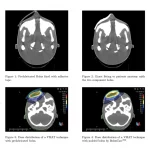
Air gaps between the bolus material and the skin are a well-known problem in radiotherapy. Studies show that even a small air gap can reduce the surface dose by 10–20% (e.g. Butson et al., 2000). This can lead to underdosing of the target volume and compromise the quality of treatment.
BolusCare minimises this risk through its flexible adaptation to the patient’s anatomy and ensures uniform contact without air gaps.
Furthermore, air gaps can also influence dose distribution in deeper tissue layers and thus distort the planned treatment geometry. The risk of such inhomogeneities is particularly elevated in anatomically complex regions or where skin surfaces are uneven. Inadequate adjustment of the bolus material can also lead to interfractional variations if the patient’s positioning varies slightly from day to day. This limits the reproducibility of the treatment and reduces therapeutic safety. Reliably preventing air gaps is therefore a key factor in precise and consistent radiotherapy.